

Key Takeaways
- Two proven paths, one goal: Both clear aligners and metal braces straighten teeth effectively. The right choice depends on your case, lifestyle, and preferences, not on one being universally better.
- Visibility and comfort: Clear aligners are removable and nearly invisible, while fixed braces stay on but handle complex movements well.
- No more goopy moulds: Modern aligner treatment starts with a quick digital scan instead of the old putty impression trays.
- Easier to start than you think: A complimentary aligner consultation and flexible financing make it simpler to see if treatment fits your budget and schedule.
- Local and convenient: Care is available in West Edmonton with evening appointments until 7 PM on Mondays, Wednesdays, and Thursdays.
Deciding to straighten your teeth is a big step, and the first question most adults ask is simple: clear aligners or traditional braces? Both can give you a healthier, better-aligned bite, but they work differently and suit different lives. If you have been weighing your options around West Edmonton, this guide walks through how the two approaches compare so you can make a confident, informed choice. For a closer look at the discreet option, you can also explore our clear aligner treatment in West Edmonton.
How Each Treatment Works
Traditional braces use metal brackets bonded to each tooth, connected by a thin archwire. Your dentist adjusts that wire over time to guide teeth into position. Because the system is fixed in place, it applies steady, continuous pressure and is especially good at correcting complex rotations and significant bite issues.
Clear aligners take a different route. You wear a series of custom, transparent trays that gradually shift your teeth, swapping to a new set roughly every one to two weeks. They are removable, so you take them out to eat, brush, and floss. Each tray is mapped out in advance using a digital plan, which means you can often preview your expected result before you begin.
Goodbye to Goopy Impressions
One of the biggest improvements in modern orthodontics is how treatment begins. In the past, getting fitted for aligners or appliances meant biting into trays full of thick putty to capture a mould of your teeth. Today, a small handheld scanner captures a precise 3D image of your mouth in minutes. The digital scan replaces those messy impressions entirely, and it gives your dental team an accurate model for planning every stage of tooth movement.
Comparing the Two Options Side by Side
Seeing the differences laid out together often makes the decision clearer. Here is how the two approaches stack up on the factors patients ask about most.

| Factor | Clear Aligners | Traditional Braces |
|---|---|---|
| Appearance | Nearly invisible transparent trays | Visible metal brackets and wires |
| Removable | Yes, for eating and cleaning | No, fixed for the full term |
| Best suited for | Mild to moderate alignment and spacing | Complex bite and rotation corrections |
| Eating | No food restrictions when trays are out | Avoid hard and sticky foods |
| Cleaning | Brush and floss normally | Extra care around brackets needed |
| Discipline required | Must wear 20 to 22 hours daily | Works without daily decisions |
Which Option Fits You Best?
There is no single winner here. The better question is which approach fits your situation. Removable, discreet trays tend to appeal to working professionals and adults who want a low-profile option and are comfortable wearing them consistently throughout the day. Fixed appliances are often the stronger choice for more involved corrections or for patients who would rather not manage a removable system day to day.
Age and lifestyle matter too. Busy households juggling work and school often value the flexibility of taking trays out for a dinner out or a family event. Others prefer a set-it-and-forget-it path that keeps working without remembering to put anything back in. The good news is that a proper assessment can quickly point you toward the option that suits your goals.
What to Expect at Your Consultation
A consultation is the easiest way to get a clear answer for your own teeth. During the visit, your dentist reviews your bite, takes a digital scan, and talks through realistic timelines and what each path would involve for you. You can ask about wear time, maintenance, and how treatment fits your routine before committing to anything.
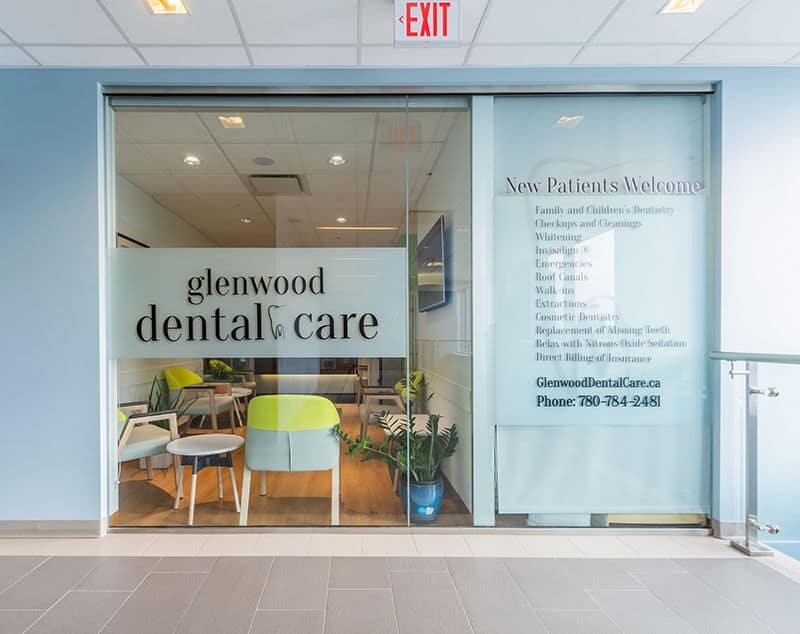
Cost and scheduling are part of that conversation as well. Glenwood Dental Care offers a complimentary aligner consultation along with flexible financing options, so you can understand the investment up front and choose a plan that works for your budget. Appointments are available in West Edmonton at 16028 100A Ave NW, with evening hours until 7 PM on Mondays, Wednesdays, and Thursdays to make starting easier around a full schedule.
Taking the Next Step
Both clear aligners and fixed braces are reliable, well-established ways to improve your smile and your bite. What matters most is matching the method to your case and your lifestyle, and that begins with a simple conversation. If you are ready to learn which option suits you, book a complimentary consultation and get a personalized recommendation built around your goals.